Think Like a Grower: What Your Plant Leaves are Trying to Tell You
Plants can’t speak but they do have the capacity to reveal clues about distress and discomfort they are feeling through their leaves.
Plants are trying to tell you something through the dots, marks, colour and texture of their leaves.
Plants are hoping you pick up on some tell-tale signs so you might be able to fix their woes.
Learning to read a plants cry for help is one of the skills that turns a beginner into a confident grower. Think like a Grower and look beyond the problem itself and ask yourself why is the plant behaving in this way? Is it stressed, too wet, too dry or is something attacking it?
Plants are talking all the time through their leaves, you just need to know what they are trying to say.
Why Leaves Tell a Story
Plants cannot tell us the problems they are facing or if theres something bothering them by picking up a phone or sending a message saying “I’m thirsty.” However they do communicate to us through changes in their leaves and growing patterns, that we can learn to recognise.
A leaf leaves clues like a trail of breadcrumbs to enable you to find the source of the problem the plant is facing. A change in colour, texture, markings or holes can signal that something has changed for the worse in the plants environment.
Don’t Panic!
It is important not to panic, the first sign of yellow leaves can be worrying. However plants sometimes have the first two leaves which turn yellow naturally as they are the leaves that drop off first. This is part of the natural growing process.
Be a Plant Detective

Think of yourself as a Plant Detective and your job is to follow the trail of evidence that the plant is giving you and work out what it is trying to tell you.
The more time you spend observing your plants, the more familiar you become of their behaviour. There will be signals if there is something wrong, once you pick up on these signs, you’ll be able to identify the problem quickly and find a solution. Problem solving builds confidence.
Here’s some questions to ask yourself about the plant:
- Has the weather changed recently?
- Has the plant been watered differently?
- Are all the leaves affected or just the older ones?
- Are there any signed of pests?
- Is the soil too wet, too dry or too old i.e. lack of nutrients?
Gardening is about understanding your plants, so don’t just look at the plants, observe them.
Yellowing Leaves – What are they telling you?
It’s all about the location on the plant of the yellow leaves.
Where is the yellow Leaf?
Is the yellow leaf an older leaf and near the bottom of the plant? Or is it new growth turning yellow?
Older leaves will turn yellow as the plants puts more energy into growth and the older leaves will fade in colour. However if it’s more than 2 leaves turning yellow, the plant is in short supply of nutrients. Add compost around the base of the plant and water well.
How quickly did the leaf change colour from green to yellow?
A gradual change in colour = natural aging or low nutrients.
A fast overnight change in colour = watering issues, pests or root damage.
What else is happening to the plant?
Is it under stress? Has there been a heatwave? Is the soil too wet or too dry? Has their plant been moved recently? Are there signs of insects?
Yellow Leaves on Courgettes – What are they telling you?
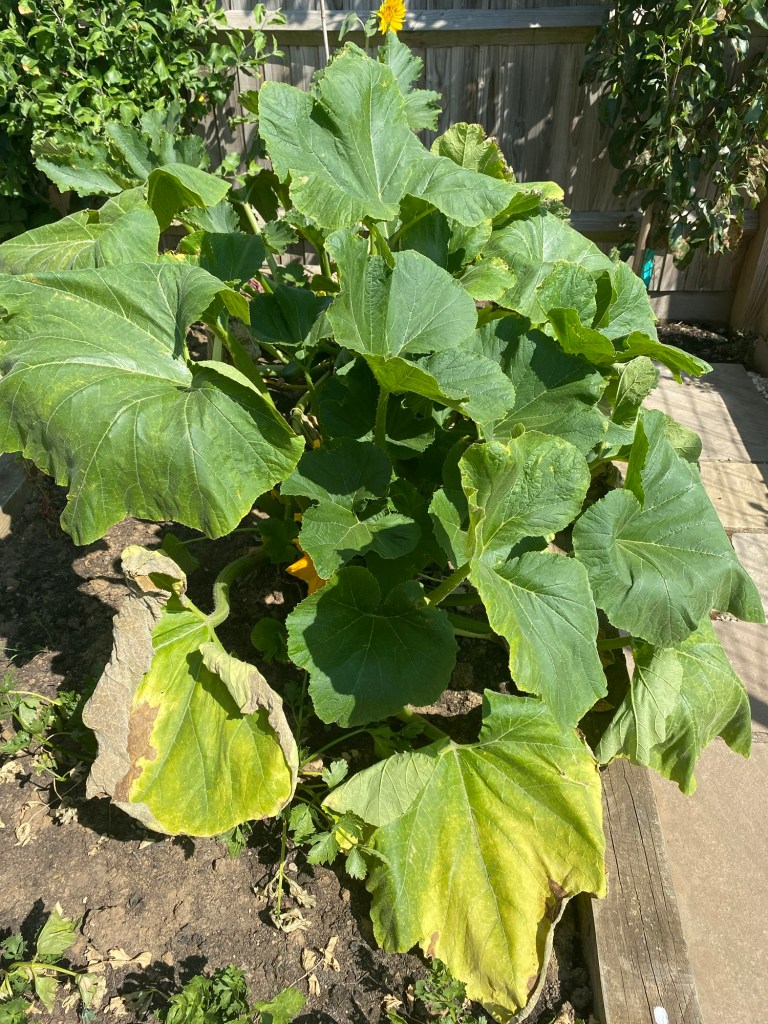
Courgettes are heavy feeders, they are large plants that will produce a number of courgettes and to do this the plant requires energy from the sun and nutrients from the soil.
Yellowing leaves at the bottom of the plant will shrivel and die back so are not a cause for concern.
However yellowing leaves all over the plant is a sign that the courgette plant is struggling.
What you See and what is might mean:
Older Leaves turning yellow = Natural aging or lack of nutrients.
Yellow leaves with wilting = watering or root stress.
New leaves turning yellow = Nutrient Issue, add more compost.
Yellow patches or spots = Pest or disease issue.
Pale Green or Yellowing Leaves mean:
- Too much water,
- Not enough nutrients,
- Natural Aging
- Pests or diseases.
Curling or Crinkled Leaves

The vegetable plant that curling and crinkled leaves hit most is the Tomato plant. Even though it is a heat loving fruit/vegetable it really suffers via its leaves. This is usually from heat stress when it is too hot or the soil is too dry.
Fruit trees have curling leaves, if pests are present and are damaging the leaves.
Crinkled Leaves = Temperature stress, not enough water.
Curling Leaves = Heat or Wind Stress or pests.
Read more – 5 Symptoms that your Plant is Feeling Stressed & How to Make them feel better.
White Patches, Dots & Powdery Leaves
White patches on leaves normally mean a fungal disease which attacks the leaves through mould spores from the soil or watering from above with a watering can or hose pipe. This can occur on vegetable plants like courgettes, squashes, pumpkins and even cucumber plants with large leaves.
With these plants leaves stacked on top of one another there is limited air flow, which is the perfect breeding ground for the fungal disease.
Powdery Mildew on Courgettes, Pumpkins & Cucumbers
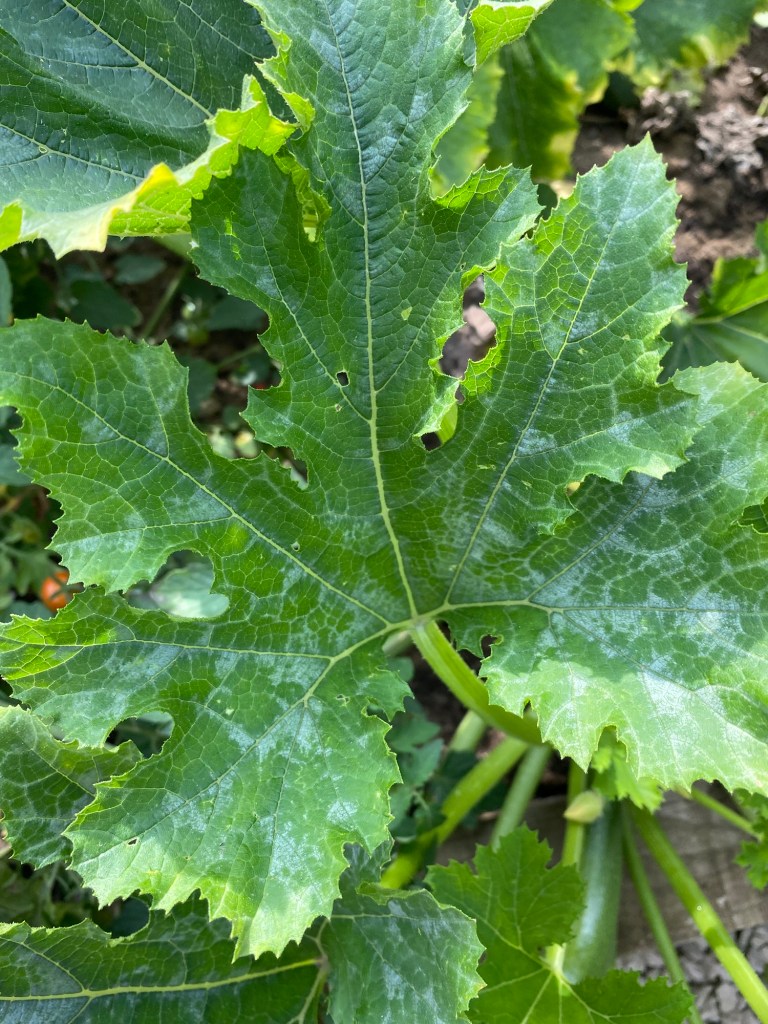
Powdery Mildew looked like talcum powder on the leaves. It is dots of white with a fuzzy edge. This is a fungal disease. If you notice it on the lower leaves of your plant, remove the leaves so the disease does not spread.
White dots on Cucumber Leaves
White dots on Cucumber Leaves are appearing for the first time in many greenhouse over the UK this year due to our heatwave. These white spots are heat stress and/or sun scorch. As you can see from plant, it’s not affecting the growth of the mini cucumbers.

Remember, the Leaves don’t lie!
A plants leaves tell a story of what is happening to them. The leaves record the weather, soil, watering and the care they have received over the course of their lives.
A gardener who just sees a yellow leaf, sees a problem.
The grower sees a clue.
Think Like a Grower and look closer at the plant, observe and notice patterns.
Every sign is an opportunity to learn more about the plant you are caring for.
You don’t need to know all the answers, you just need to observe, learn and adapt.
So next time you spot a leaf that is yellow or brown, crinkled, or has white spots, don’t panic, slow down your thinking and ask what is my plant trying to tell me?
A simple change can transform the way you garden.

Visit SowGrowHarvest.co.uk for all things Veg & Fruit!
Visit my Instagram page @traceysowgrowharvest where this week one of my Fruit Reels went Viral!
If you are more of a Facebook fan, Follow me here.


Comments
Post a Comment